
THE FIELD GUIDE
Experience worth
passing on.
Real work raises real questions. Find practical guidance for the truck, the job site, and the EHS desk.
Find your next read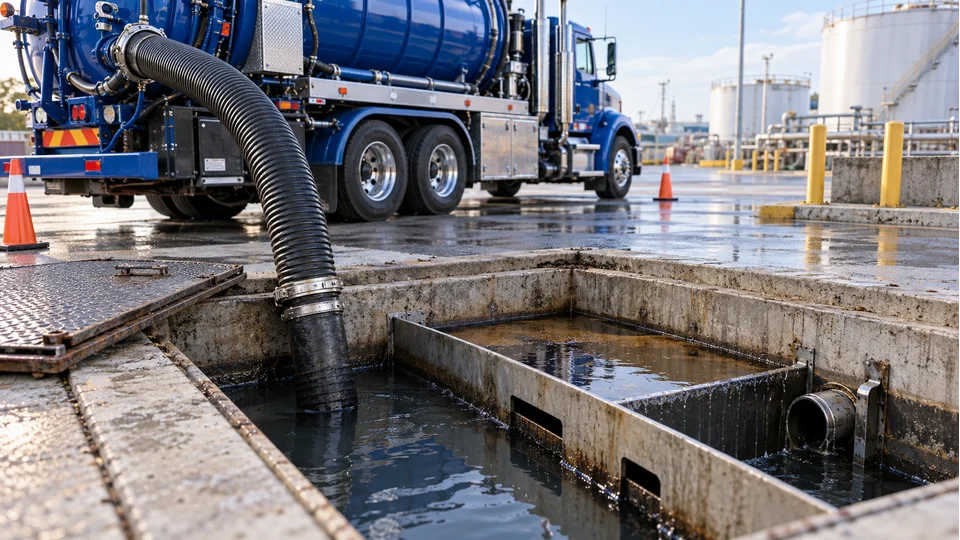 FROM THE FIELD
A REAL CLIENT STORY
Your crew is dumping degreaser down the OWS.
What happens when the cleaning routine and the separator don't work together?
Read the story ↗KEEP LEARNING. KEEP MOVING.
Find the guidance for your job.
28 guides
Hazardous waste labels: what belongs on the container
Separate central and satellite accumulation labels, hazard indications, shipping markings, and monochrome workplace-label options.
Lab packs: check compatibility before grouping the containers
Use the chemical inventory, DOT provisions, waste determination, and receiving-facility approval to plan a lab pack.
Household hazardous waste: when the exclusion applies
Distinguish household waste from business waste and confirm collection-program acceptance before delivering material.
Read an NFPA 704 diamond without confusing it with DOT or GHS
Learn what the NFPA quadrants communicate and why facility ratings, workplace labels, and transport placards cannot be swapped.
Your Crew Is Dumping Degreaser Down the OWS
A real client experience with degreaser entering an oil/water separator, plus practical steps for cleaner compatibility, drain labeling, and crew training.
Environmental inspection readiness: a practical site walkthrough
Check waste records, storage, permits, response plans, and follow-up actions against the requirements that apply to your facility.
Waste profiles: confirm approval before the truck arrives
Track waste-profile approvals and process changes, distinguish facility acceptance from RCRA determinations, and plan for a rejected load.
Keep the SPCC plan aligned with the facility
Check the five-year review, changes affecting discharge potential, containment assumptions, and the people responsible for the plan.
Budget for the whole environmental incident, not just the fine
Build an incident cost record that separates response, investigation, cleanup, business disruption, and enforcement without invented averages.
The first minutes of a spill: protect people and call the right help
Use the site emergency plan to assess a spill, raise the alarm, make required notifications, and record the response without unsafe cleanup shortcuts.
Industrial stormwater sampling: work from your actual permit
Build an outfall sampling plan around the permit that covers your facility, its monitoring conditions, and laboratory handling requirements.
Hiring a vacuum truck: prepare the load and the job site
Scope vacuum recovery work with waste information, access details, equipment suitability, disposal approval, and a clear price structure.
Underground tank closure: plan the work and the site assessment
Prepare for underground storage tank closure with the implementing agency, qualified contractors, a waste plan, and documented assessment results.
Choose an environmental contractor by scope, capability, and accountability
Compare environmental service bids using the same scope, verify applicable credentials, and agree on changes and documentation before work begins.
Hazardous waste generator categories: find the right threshold
Check federal VSQG, SQG, and LQG boundaries, acute-waste triggers, and the difference between monthly generation and on-site accumulation.
Used oil management: keep the stream separate and the records clear
Understand used-oil identification, labeling, the halogen presumption, and which storage requirements apply to generators.
DOT hazmat shipping: check the material, package, paperwork, and load
Prepare a hazardous-material shipment with clear checks for classification, packaging, papers, markings, training, and mixed-load placards.
Phase I environmental assessments: scope, timing, and follow-up
Understand what a Phase I assessment investigates, how AAI timing works, and what to ask about findings before a property transaction.
RCRA-empty containers: check the residue and the previous contents
Understand normal removal practices, alternative residue limits, acute-waste exceptions, and why empty does not mean safe to cut.
Industrial wastewater: know where the discharge goes
Separate sanitary-sewer pretreatment from direct-discharge permitting, then organize the limits, sampling, reporting, and change notifications for your facility.
Asbestos work: establish the scope before disturbing material
Check inspection, notification, worker-protection, and disposal requirements before planning asbestos renovation or demolition work.
Suspected PCBs: identify the material and the cleanup pathway
Plan PCB response around source concentration, release conditions, affected materials, reporting, and the applicable TSCA cleanup provisions.
Confined-space entry: evaluate the hazards before planning the work
Understand permit-space roles, atmospheric testing, monitoring, and rescue planning without treating a four-gas meter as an entry permit.
Environmental due diligence before buying property
Use environmental assessment, legal review, and a plan for continuing obligations to understand property risks before closing.
Hazardous waste storage: build a workable accumulation area
Plan waste accumulation around generator category, container compatibility, inspections, dates, and emergency access.
Choose a spill kit for the material and the response plan
Compare spill-kit contents by chemical compatibility, access, PPE, containment needs, and the work your staff are trained to perform.
Build a compliance calendar from the requirements that apply
Separate fixed federal reporting dates, permit-specific schedules, and event-triggered duties with named owners and supporting records.
Satellite accumulation: the 55-gallon limit and the excess-waste clock
Understand satellite location, labeling, container care, and when the three-calendar-day excess-waste deadline actually begins.
No guides match that search. Try another term or choose All.
PUT IT TO WORK