
Underground Storage Tank Removal: Cost, Process & What to Expect
An underground storage tank removal is one of the most expensive and consequential environmental projects a property owner will face. A clean removal with no contamination runs $10,000 to $20,000. A removal that finds contamination escalates quickly into the $50,000 to $250,000+ range depending on the extent and depth of the impacted soil and whether groundwater is involved.
The cost uncertainty is what makes UST work stressful. Until the tank comes out and soil samples come back from the lab, nobody knows for certain whether the site is clean. A tank sitting unused for 20 years can be perfectly intact or sitting in the middle of a contamination plume from decades of slow leakage. The same is true of an active station; routine release detection only finds large losses, and small chronic leaks can persist for years undetected.
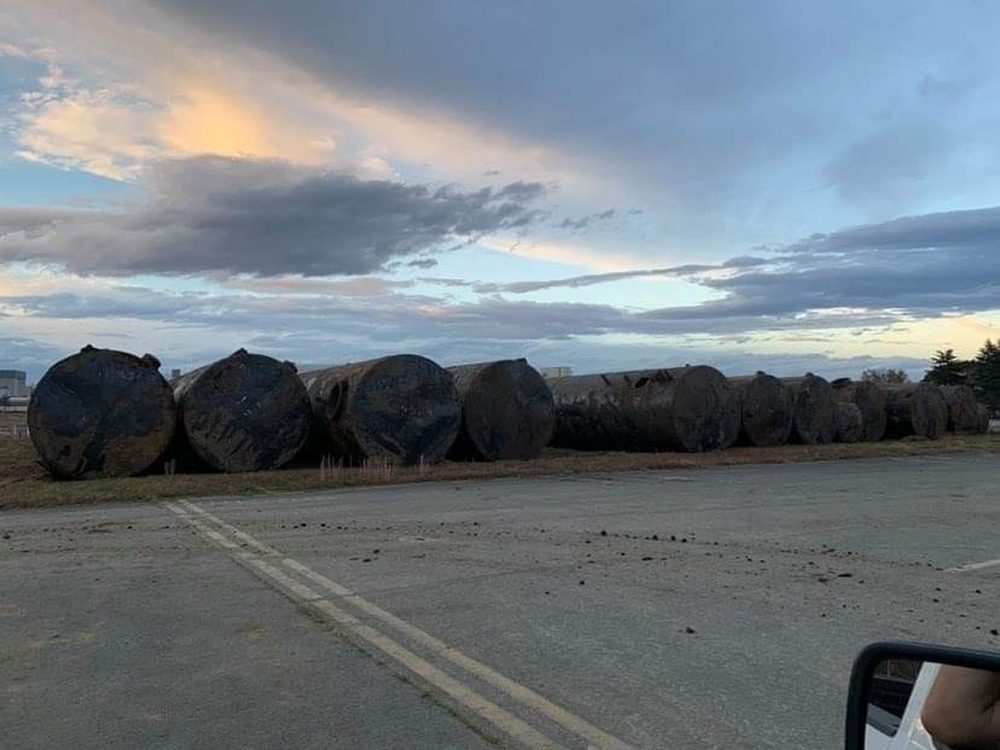
What Counts as a UST
The federal UST program at 40 CFR Part 280 applies to tanks with at least 10 percent of their combined volume (tank plus piping) below the ground surface that store petroleum or certain hazardous substances listed under CERCLA. Excluded categories include:
- Farm and residential tanks of 1,100 gallons or less storing motor fuel for noncommercial use
- Tanks storing heating oil for consumptive use on the premises (federally excluded but regulated in many states)
- Septic tanks
- Stormwater and wastewater collection systems
- Flow-through process tanks
- Tanks of 110 gallons or less
- Emergency spill and overfill tanks
State programs commonly regulate categories the federal program excludes. Heating oil tanks, for example, are regulated under state law in Maine, New York, New Jersey, Vermont, Maryland, and others, even though they are excluded from 40 CFR Part 280. Verify which UST rules apply by contacting the state implementing agency before scheduling closure work.
When UST Removal Is Required
Federal UST regulations recognize two forms of permanent closure: removal from the ground, and closure in place. Either approach must satisfy the same closure requirements. Common situations that trigger closure:
- End of operating life: A tank reaches the end of its operating life, fails a tightness test, or no longer meets release detection or corrosion protection requirements. Single-walled tanks installed before 1988 generally must be upgraded, replaced, or closed.
- Property transaction: Most commercial property buyers and lenders require UST closure prior to acquisition unless the tank system is fully operational and meets current standards. Phase 1 ESAs routinely flag in-place USTs as Recognized Environmental Conditions.
- Change of use: A property being redeveloped for residential, school, or daycare use frequently triggers closure of any in-place commercial USTs.
- Temporary closure exceeding 12 months: Under 40 CFR 280.70(c), a tank in temporary closure for more than 12 months must be permanently closed unless the implementing agency grants an extension.
- Regulatory order: A state UST authority can order removal following confirmed releases, repeated failures of release detection, or deferred corrective action.
The Removal Process Step by Step
- 30-day advance notice and permitting. Federal law requires notice to the implementing agency at least 30 days before closure work begins (40 CFR 280.71(a)). A tank removal permit from the state UST program, local fire marshal, or both is typically required. Allow 4 to 8 weeks for processing depending on jurisdiction. Some states require a closure plan submitted with the application.
- Utility location and excavation planning. Call 811 (or local one-call service) for utility marking at least 48 hours before excavation. Identify overhead clearances, traffic control needs, soil staging area, and waste manifest destinations.
- Tank preparation. The contractor pumps all remaining product, water, and sludge. Even a tank reported as empty typically has several inches of sludge at the bottom that must be characterized and disposed of as petroleum-contaminated waste. Product and sludge are typically managed under 40 CFR 279 (used oil) or 40 CFR Part 261 (hazardous waste) depending on characterization results.
- Vapor freeing and inerting. The tank atmosphere is rendered non-flammable before any hot work. API Recommended Practice 1604 specifies inerting procedures using carbon dioxide, nitrogen, or solid dry ice. The lower explosive limit (LEL) for gasoline vapor is approximately 1.4 percent; an inerted tank should test at zero percent LEL before cutting.
- Excavation. A track-mounted excavator opens the ground around the tank. OSHA excavation standards at 29 CFR Part 1926 Subpart P apply, including the requirement for a competent person for trenches over five feet deep, protective systems, and atmospheric monitoring in low-oxygen environments.
- Tank removal and inspection. The tank is rigged from above, lifted, and inspected for holes, corrosion, and obvious release indicators. Photographs of the tank exterior, particularly the bottom and any visible corrosion, are part of the closure record. The tank is then cut into pieces small enough to load on a truck (for steel tanks) or hauled intact (for smaller fiberglass tanks).
- Soil sampling. Samples are collected from the floor and sidewalls of the excavation per state-specific protocols, typically two samples per tank and one sample per 20 linear feet of piping. Analyte selection depends on tank contents: BTEX and MTBE for gasoline, total petroleum hydrocarbons (TPH) for diesel and heating oil, and specific metals plus volatile organic compounds for waste oil tanks. EPA Method 8260 for VOCs and 8270 for SVOCs are common; TPH is typically by Method 8015B or state-modified equivalents.
- Assess results and proceed. Clean soil (below state cleanup criteria) allows immediate backfill and surface restoration. Detected contamination triggers reporting under 40 CFR 280.61 or state equivalents, and the project moves into corrective action under 40 CFR 280 Subpart F.
- Closure report. A closure report documenting the work, analytical results, photographs, manifests, and tank disposal records is submitted to the implementing agency within the timeframe specified by state law (typically 30 to 90 days after completion). Closure is not final until the agency accepts the report.
What Drives Cost Up
Contamination. Every yard of impacted soil that must be excavated, transported, and disposed of adds material cost. Excavation runs $50 to $150 per ton. Disposal at a permitted petroleum-contaminated soil facility runs $30 to $80 per ton for non-hazardous contamination, $150 to $400+ per ton if the soil fails Toxicity Characteristic Leaching Procedure (TCLP) and is classified as hazardous under 40 CFR 261.24. A typical contaminated site may require 50 to 500 tons of soil removal, putting just the disposal portion of the project at $4,000 to $200,000.
Groundwater. A monitoring well runs $2,000 to $5,000 to install depending on depth and lithology. Sampling and analysis runs $500 to $2,000 per round per well. If groundwater contamination is confirmed and a remediation system is required, total project cost can reach $50,000 to $500,000+ over the operating life of the system (often 5 to 15 years for hydrocarbon plumes).
Location and access. Urban sites cost more due to limited equipment access, traffic control requirements, vibration restrictions near adjacent structures, and proximity to utilities. Restoration of paved surfaces, sidewalks, or buildings adds $5,000 to $50,000+ depending on the area.
Tank size and quantity. A single 1,000-gallon residential heating oil tank is typically a one-day job at $4,000 to $8,000. A retail fueling station with three 10,000-gallon tanks plus dispenser piping is a 1 to 2 week project starting at $40,000 and quickly escalating with any contamination.
Tank contents and condition. Waste oil tanks routinely cost more to close than fuel tanks because waste oil characterizes more often as hazardous, and the closure record must include both the tank and the historical waste stream documentation. Heating oil tanks vary by state regulation.
Free product. If free product (floating petroleum) is encountered in the excavation or in a monitoring well, immediate recovery is required under 40 CFR 280.64. Vacuum truck recovery, oil-water separator pumping, and product disposal add immediate cost.
State Cleanup Funds and Reimbursement
Most states operate UST cleanup trust funds that reimburse eligible property owners for investigation and corrective action costs. These programs were created in response to the 1986 federal financial responsibility rule requiring UST owners to demonstrate the ability to pay for releases, and they remain the primary source of cleanup funding for many sites. Common eligibility requirements:
- Tank registered and registration fees current
- UST insurance fund or trust fund fees paid through the date of the release
- No willful or grossly negligent conduct contributing to the release
- Compliance with applicable release detection and corrosion protection requirements
- Notification of the release within the timeframe required by state law (typically 24 hours)
- Use of state-approved contractors and laboratories where required
Deductibles vary by state, typically $5,000 to $25,000 per occurrence. Reimbursement caps range from $1 million to $2 million per occurrence. The reimbursement process can take 6 to 24 months from invoice submission to payment, which creates a working capital strain on smaller operators. Some states issue partial reimbursements during the project rather than at the end.
What Happens If Contamination Is Found
Soil or groundwater contamination above state cleanup criteria triggers reporting and corrective action under 40 CFR 280 Subpart E and F (or state equivalents). The typical progression:
- 24-hour release notification: Confirmed releases must be reported within 24 hours (40 CFR 280.50). State reporting requirements may be stricter.
- Initial abatement and free product removal: Immediately stop the release if ongoing, contain spread, and recover free product (40 CFR 280.62 and 280.64).
- Site characterization: Define the extent of soil and groundwater contamination through additional sampling, monitoring well installation, and laboratory analysis.
- Corrective action plan: Submit a remediation approach to the implementing agency: excavation and disposal, soil vapor extraction, in-situ chemical oxidation, bioremediation, monitored natural attenuation, or some combination.
- Implementation and monitoring: Carry out the approved plan. Most projects involve quarterly or semi-annual groundwater monitoring for several years.
- Closure: When cleanup criteria are met, the agency issues a closure letter or No Further Action determination. Some states impose deed restrictions or institutional controls for sites with residual contamination above unrestricted use criteria.
Total corrective action cost varies widely. A small soil-only release at a heating oil tank may close at $15,000 to $40,000. A complex groundwater plume at a former gas station, particularly if MTBE is involved, can exceed $1 million over the project life.
Choosing a Contractor
UST removal requires a state-licensed tank removal contractor in nearly every jurisdiction. Specific qualifications to verify:
- State UST contractor license: Look up the contractor in the state UST registry. Verify the license is current and covers tank removal.
- Trained operators: The contractor's lead technicians should hold Class A/B/C operator certifications under 40 CFR 280.245 or state equivalents.
- Insurance: General liability and pollution legal liability (PLL) insurance carriers and limits. Verify the certificate of insurance directly with the carrier, not just from the contractor.
- References: Three to five recent closures of similar tanks, ideally in the same state and county. Ask the references specifically about contamination discovery handling.
- Written scope of work: The proposal should separate base removal cost from contingency costs that apply only if contamination is found. T&M rates for additional excavation, soil disposal pricing, and additional sampling should be itemized.
- Lab partnerships: The lab the contractor uses should be certified under the state ELAP/NELAP program for the relevant methods.
Need a UST removal contractor? Find licensed tank removal companies in our provider directory. For related topics, see our Phase 1 ESA guide, SPCC plan requirements, and the real cost of environmental violations.
Primary references
Use these official references to check the provisions discussed above. Applicability, exceptions, and state or local requirements must be checked for your situation.