
OWS Maintenance: Oil/Water Separator Cleaning & Compliance
Your oil/water separator is probably the most important piece of environmental equipment at your facility, and the one most likely to be ignored. It sits underground or behind the building, quietly doing its job until something goes wrong. When something does go wrong, the consequences are expensive and immediate.
An OWS separates oil from water using gravity. Water enters from floor drains, loading dock drains, or stormwater drains. Oil floats to the top. Solids settle to the bottom. The clean water in the middle discharges to sanitary sewer or stormwater under your facility permit. Coalescing plates inside the separator increase surface area so smaller oil droplets can combine and rise faster.
When the separator is not maintained, the oil layer gets too thick, the sludge layer fills the bottom, and oil starts passing through to the discharge. If that discharge goes to stormwater, you are sending oil into a waterway. If it goes to sanitary sewer, you are violating your pretreatment permit. Either way, it is a citation.
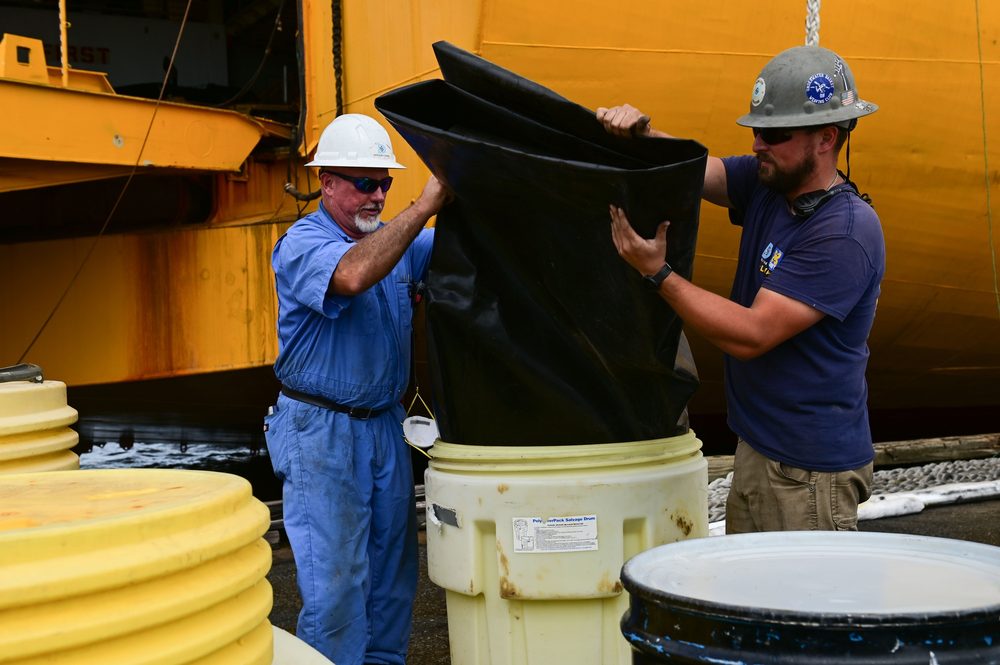
What OWS Maintenance Involves
Pumping. A vacuum truck removes the oil layer, water, and sludge from the separator. The waste is hauled to a permitted disposal facility. Frequency depends on loading, but most OWS units need pumping every 3 to 6 months. High-volume facilities may need monthly service.
Inspection. After pumping, the technician inspects the coalescing plates, baffles, inlet and outlet pipes, and the structural integrity of the separator itself. Cracked plates, damaged baffles, or deteriorating concrete walls all reduce separation efficiency.
Waste disposal. OWS waste is classified based on its contents. Oily water typically goes to a wastewater treatment facility as non-hazardous industrial waste. If the separator receives solvents or chemicals, the waste may require hazardous waste characterization.
What It Costs
A standard OWS cleaning for a 500 to 1,500 gallon separator typically runs $1,200 to $2,500. Larger separators (5,000+ gallons) or those with heavy sludge loading can run $3,000 to $6,000. Coalescing plate replacement adds $1,500 to $5,000. Compare that to a pretreatment permit exceedance starting at $1,000 to $5,000 per violation, or Clean Water Act penalties starting at $25,000 per day for stormwater discharge violations.
Signs Your OWS Needs Attention
Oil sheen visible in your stormwater discharge or parking lot runoff. Slow draining floor drains. Odors coming from drain openings. Your POTW notifying you of elevated oil and grease levels. Any of these means the separator is overloaded or failing, and you need service now, not next quarter.
Compliance Requirements
Most municipalities require OWS maintenance records as part of your pretreatment or stormwater permit. Typical requirements include quarterly or semi-annual cleaning documentation, annual inspection reports, waste manifests for all removed material, and maintenance logs. No records means no proof of compliance, and that is a finding every single time.
How to Choose a Contractor
Look for companies with vacuum truck capability, proper waste transportation permits, and relationships with licensed disposal facilities. Ask for documentation of every service visit. A contractor who does not provide documentation is not protecting your compliance record. The company that documents everything and flags problems early saves you more in avoided violations than the $200 you saved on the pump-out.
Need your OWS cleaned or inspected? Find environmental services companies in our provider directory.